7 Plumbing Tips Every Custom Homeowner Should Consider Before Construction
Building a custom home is an exciting opportunity to create a space that fits your lifestyle for years to come. Most homeowners spend countless hours selecting flooring, cabinetry, lighting, paint colours, and fixtures.
One area that often receives less attention is the plumbing system hidden behind the walls.
Many plumbing decisions are inexpensive during construction but can become difficult and costly once the home is finished. Taking the time to plan these details early can improve comfort, convenience, and help protect your investment.
Here are seven plumbing considerations worth discussing with your builder and plumber before construction begins.
1. Plan for a Hot Water Recirculation System
If you've ever waited for hot water to reach a bathroom or kitchen, you've experienced one of the most common frustrations in larger homes.
A hot water recirculation system allows hot water to reach fixtures much faster by returning unused hot water back to the mechanical room instead of allowing it to cool in the piping.
Benefits include:
- Faster access to hot water
- Reduced water waste while waiting
- Improved comfort throughout the home
- A better experience in larger floor plans
The ideal design depends on your home's layout. In many custom homes, a dedicated return line paired with a programmable or demand controlled pump provides excellent performance while reducing unnecessary pump operation.
2. Think Beyond Standard Hose Bibs
Outdoor water use has changed significantly over the years.
Instead of installing only one hose bib at the front and one at the back, think about how you'll actually use your property.
Consider planning for:
- Future irrigation systems
- Garden areas
- Outdoor kitchens
- Pool equipment
- Hot tubs
- Detached garages or workshops
Many homeowners also choose to have each hose bib supplied individually from a plumbing manifold, allowing every exterior faucet to be shut off independently during the winter.
3. Design Your Water Quality System
Water quality varies from one property to another.
Municipal water may contain chlorine and hard minerals, while well water can introduce challenges such as iron, manganese, sulphur, or sediment.
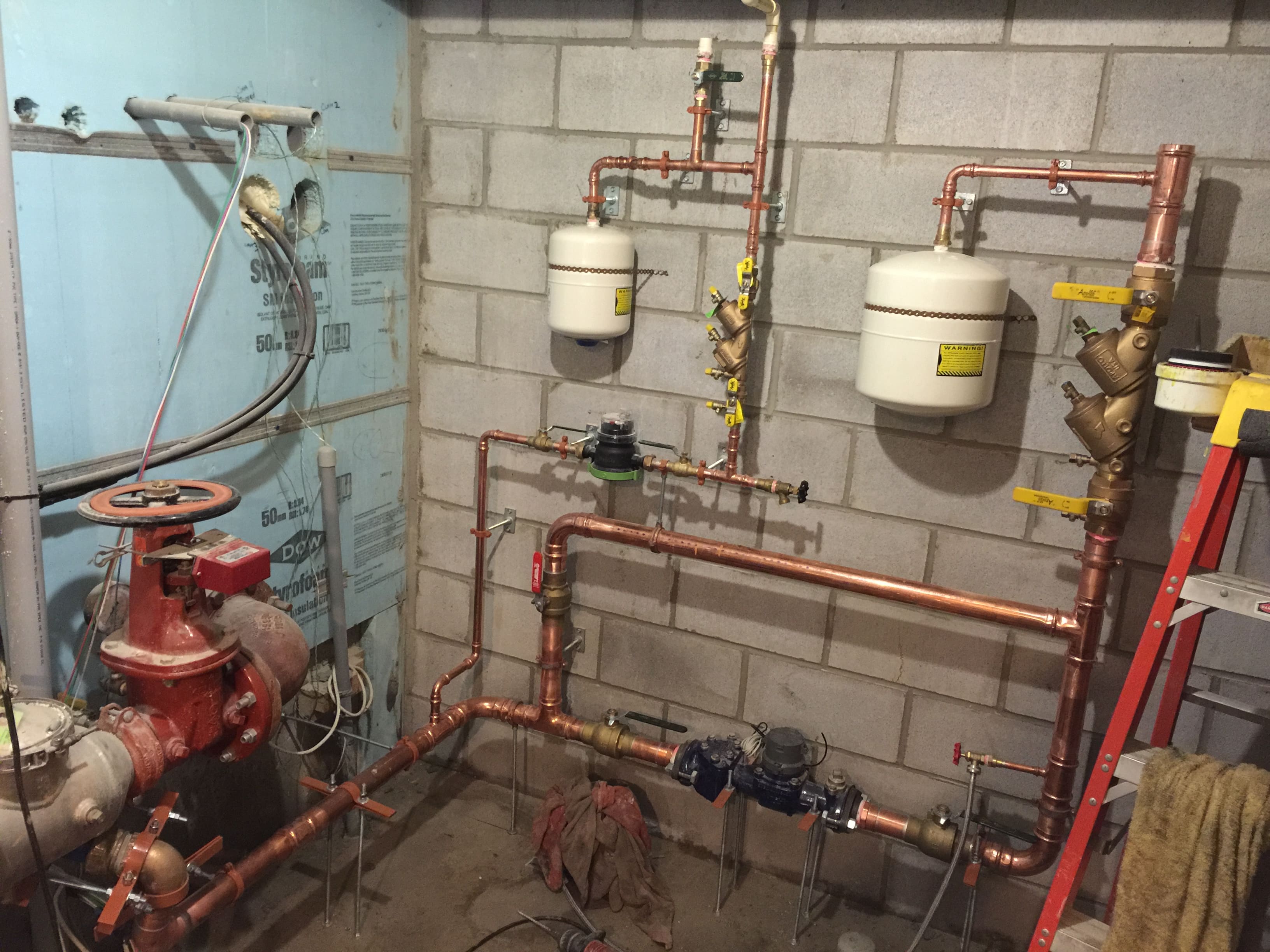
Planning your mechanical room with enough space for future equipment makes installation much easier.
Common water treatment options include:
- Water softeners
- Carbon filtration
- Reverse osmosis drinking water systems
- Iron and sulphur treatment systems
- Sediment filtration
Selecting the right equipment depends on a proper water analysis and your household's needs.
4. Separate Hard Water and Softened Water Where Appropriate
Not every fixture needs softened water.
Many homeowners choose to soften water supplied to showers, bathtubs, and laundry equipment while leaving certain fixtures on hard water.
Depending on the home's design, this may include:
- Exterior hose bibs
- Kitchen drinking water
- Refrigerator water lines
- Pot fillers
- Steam ovens
- Coffee stations
Planning these plumbing runs during construction provides greater flexibility and can improve long term operating costs.
5. Protect Your Basement From Water Damage
A finished basement represents a significant investment.
Choosing quality drainage equipment during construction can provide valuable peace of mind.
Consider discussing:
- Sump basin location
- Pump quality
- Battery backup systems
- High water alarms
- Easy service access
For homes with finished basements, these upgrades can help reduce the risk of damage during power outages or pump failures.
6. Add Floor Drains Where They Make Sense
Floor drains are often overlooked until they're needed.
Depending on your home's layout, they can provide an extra layer of protection in areas where accidental water leaks are more likely.
Common locations include:
- Laundry rooms
- Mechanical rooms
- Garages
- Utility rooms
Many homeowners also install washing machine drain pans that discharge to a floor drain where practical.
7. Plan for Future Plumbing Needs
Even if you don't need additional plumbing today, roughing in certain features during construction is often far more affordable than adding them later.
Examples include:
- Basement bathroom rough ins
- Wet bar plumbing
- Garage sinks
- Utility sinks
- Future pool house or workshop services
A little planning today can save significant renovation costs in the future.
Final Thoughts
Every custom home is different, and the right plumbing design depends on your family's lifestyle, your home's layout, and your long term plans.
The plumbing system is one of the few parts of a home you'll rarely see once construction is complete, but it's something you'll rely on every day for decades.
Taking the time to discuss these details before construction begins can help create a home that's more comfortable, more efficient, and easier to maintain.
If you're planning a custom home in Kitchener, Waterloo, Cambridge, or the surrounding area, we're always happy to discuss plumbing options early in the design process and help you make informed decisions before construction begins.